17 November 2025
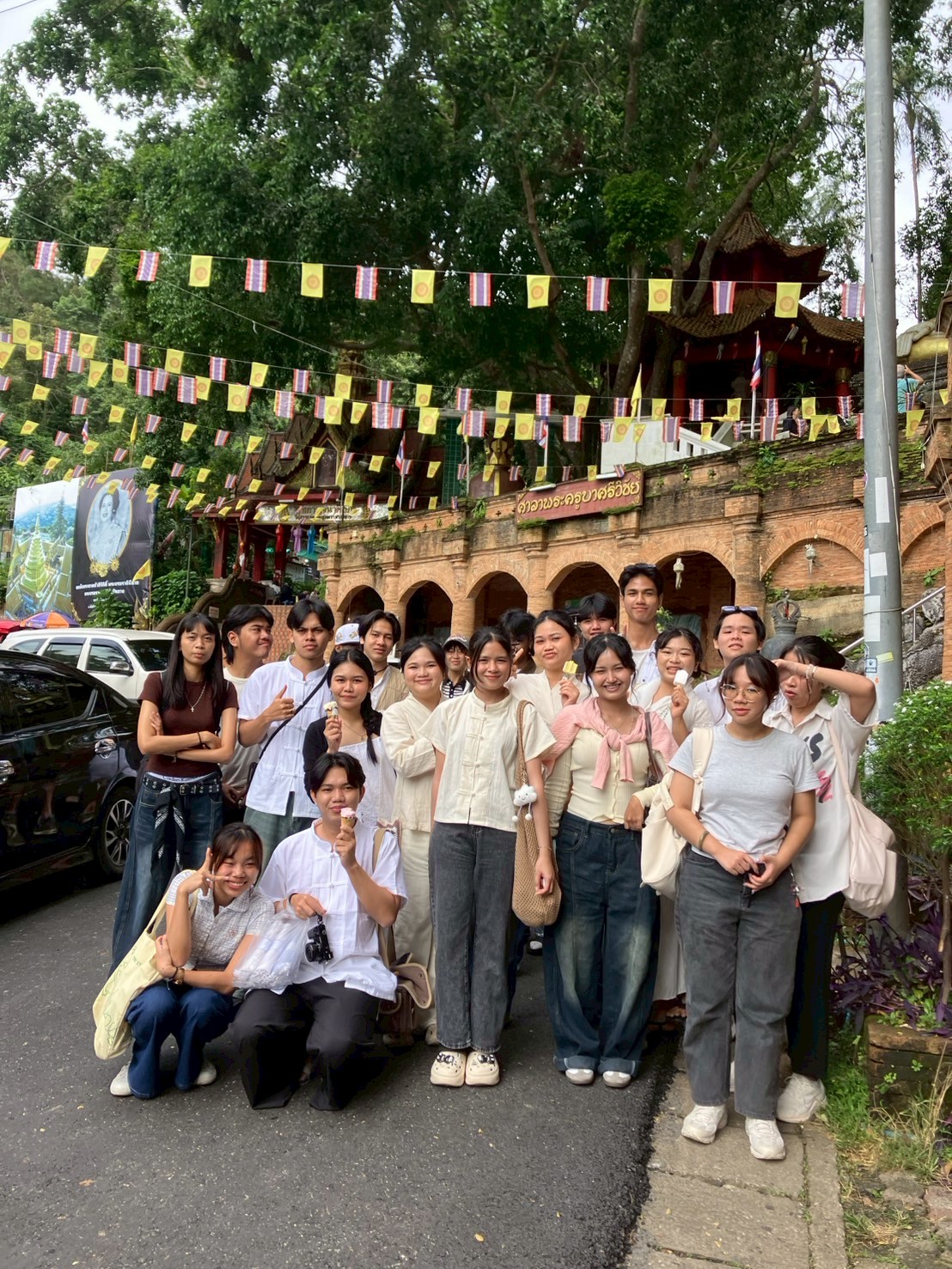
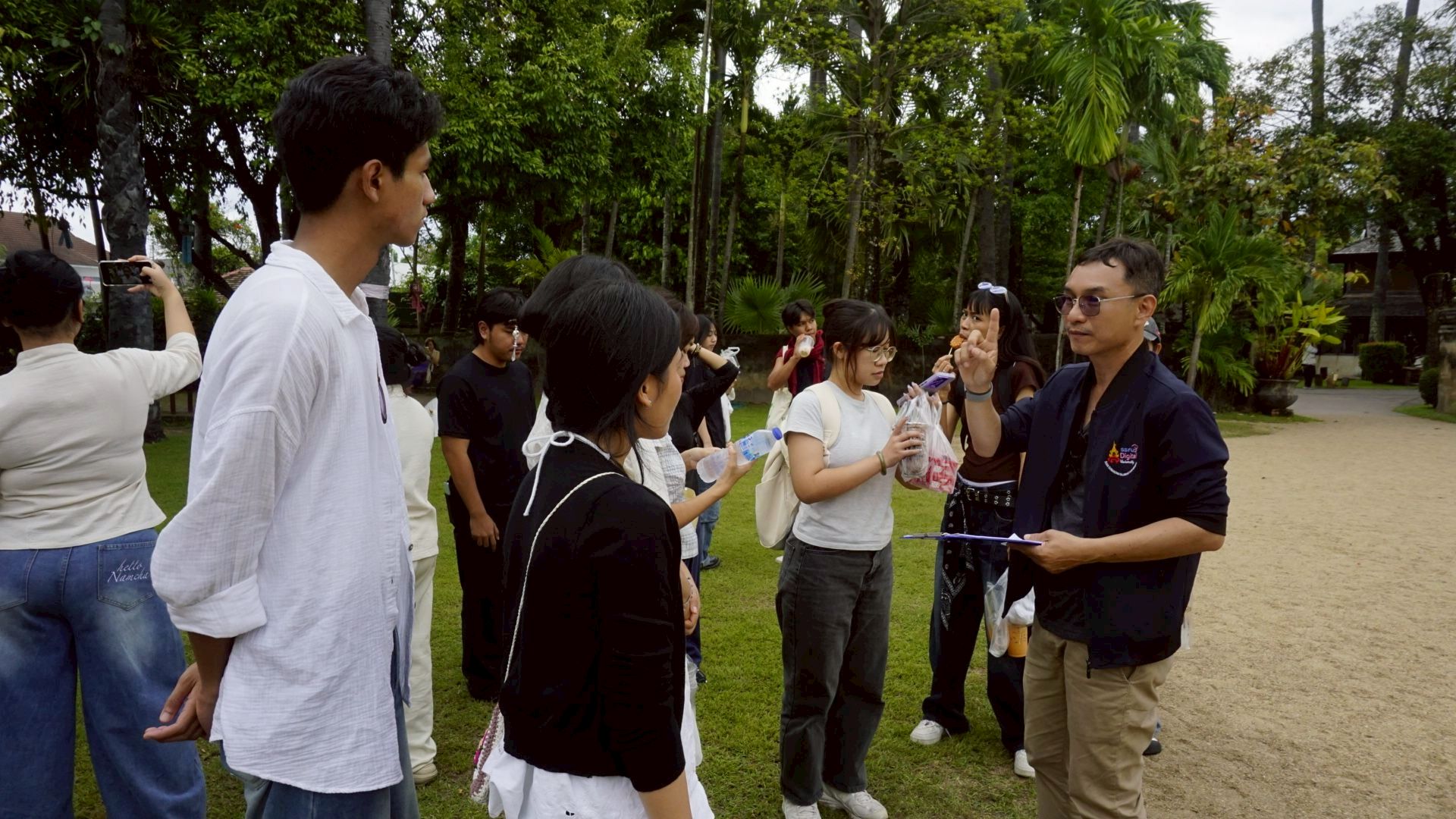
The Architecture Program continued its out-of-class learning activities under the project “Survey and Study of Northern Residential Architecture and Religious Buildings of Lanna Culture.” The objective of this field study was to enhance students’ firsthand experience in Lanna architecture and to develop deeper perspectives on local culture, through visits to sites of historical significance and traditional wisdom.
The activity began with a visit for worship and architectural study at Phra That Doi Suphet, an outstanding example of Chiang Saen–style stupa architecture. The stupa features a distinctive stepped base, an octagonal bell-shaped body, an elaborately crafted throne, and is entirely covered with gold leaf (jangko)—all of which are defining characteristics of sacred stupas in Lanna culture.
The students then visited Wat Pha Lat to study examples of contemporary Lanna architecture that are harmoniously integrated with the natural environment. The temple serves as an exemplary model of design that respects the original landscape and demonstrates the refined application of landscape architecture combined with local craftsmanship.
The next destination was Wat Ton Kwen, an ancient temple constructed during the reign of King Kawiloros Suriyawong, the sixth ruler of Chiang Mai. The temple was originally named after the Ba Kwen (Cudrania cochinchinensis) tree and was later renamed in honor of Khruba In, a master craftsman who played a significant role in the construction of the main assembly hall. Built in 1858, the viharn houses a principal Buddha image in the Mara-Vijaya posture, with walls adorned with decorative niches and metal Buddha plaques. These elements beautifully convey the distinctive identity of Lanna architecture and the spirit of the local community.
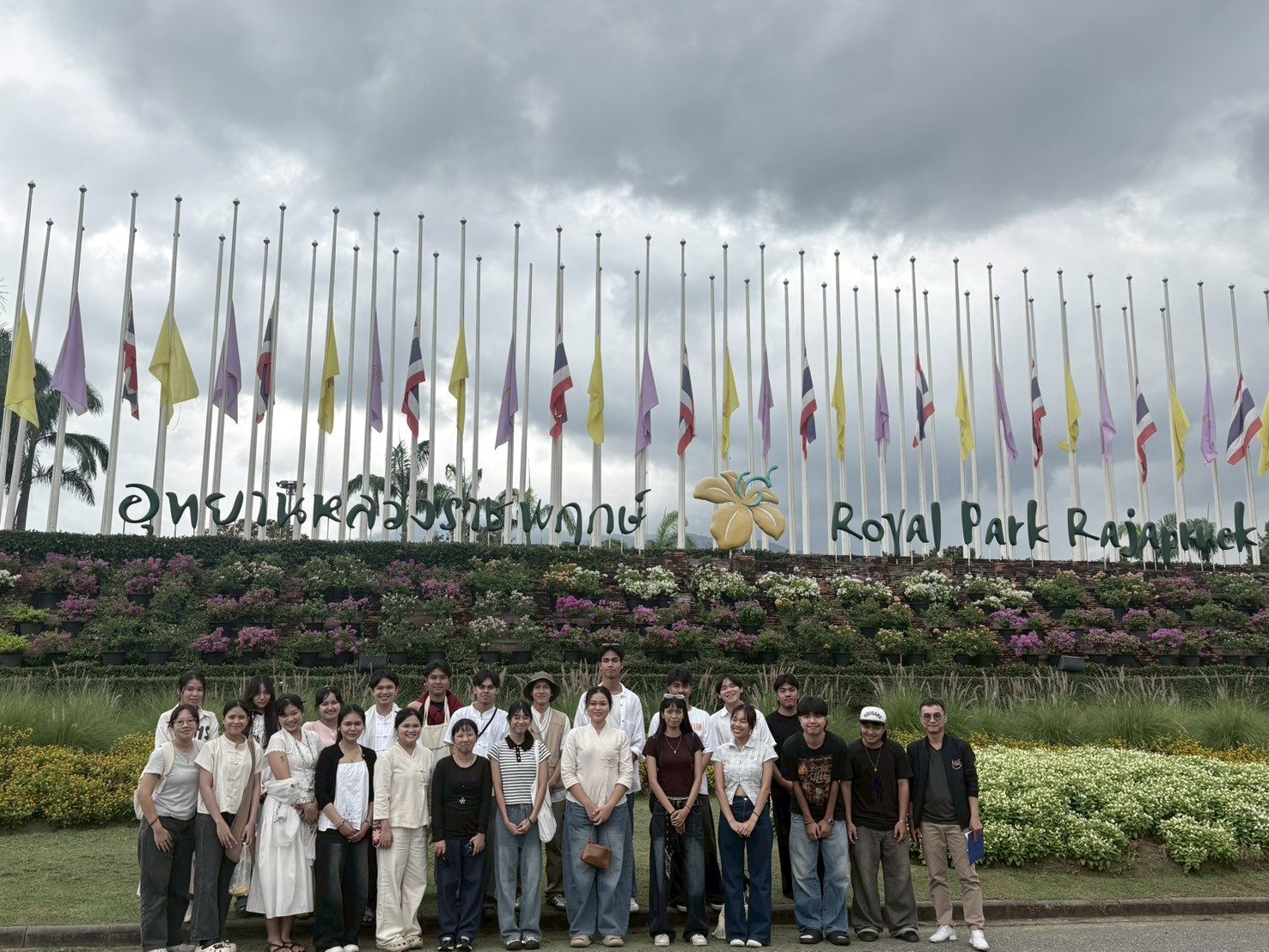
The activity concluded with a visit to the Royal Park Rajapruek, where students studied areas dedicated to horticulture and landscape architecture. As both an agricultural tourism destination and a conservation center for important plant species in Chiang Mai, the park provided students with a comprehensive understanding of the integration between architectural structures and landscape design within the architectural profession.
This out-of-class learning experience offered students valuable insights into both architectural and landscape dimensions, further enriching their academic knowledge and professional development in architecture.